The right typography sets the tone before a client even reads your name. Minimalist luxury business card font pairings matter because they communicate exclusivity, clarity, and attention to detail. When you strip away unnecessary design elements, the typefaces you choose carry the entire weight of your brand's perceived value. A well-matched combination of a refined serif and a clean sans-serif creates a sophisticated aesthetic that feels expensive without trying too hard.
If you are exploring how to balance elegance with readability, understanding the fundamentals of typography for high-end stationery is the first step toward creating a memorable first impression.
What makes a font pairing feel luxurious and minimalist?
A luxurious minimalist design relies on contrast and breathing room. You typically want to limit your layout to two typefaces: one for headings or your name, and another for contact details. The primary font should have distinct character, perhaps a high-contrast serif, while the secondary font needs to be highly legible at small sizes. This balance prevents the card from looking cluttered while maintaining a premium feel.
Which specific font combinations work best for high-end brands?
Certain typefaces naturally lend themselves to premium branding. A classic approach pairs a traditional serif with a geometric sans-serif. For example, combining Playfair Display for your name with Montserrat for your title creates a sharp, modern contrast. Another effective option is using Cormorant Garamond alongside a clean font like Lato. These combinations offer the sophistication of classic typography without the visual noise.
If you lean toward traditional elegance, exploring the top classic typefaces for premium branding can help you find a primary font that commands respect and establishes authority.
When should you adjust your typography for specific industries?
Different professions require subtle adjustments in tone. A creative director might opt for a highly stylized, thin sans-serif to show a modern edge, while a financial advisor needs something that communicates stability and trust. For instance, professionals in property often benefit from specialized typography choices for property professionals that balance approachability with high-end market positioning. The goal is to align the typography with the expectations of your specific clientele.
What are the most common mistakes people make with minimalist typography?
The biggest error is sacrificing legibility for style. Using a font that is too thin or too condensed makes contact information impossible to read, especially on textured or dark cardstock. Another frequent mistake is using more than two font families, which instantly destroys the minimalist aesthetic. Finally, ignoring tracking, or letter spacing, can ruin a good pairing. Adding slight letter spacing to all-caps sans-serif text often elevates the perceived quality of the design.
How do you test your font pairing before printing?
Always print a physical proof at actual size. A font pairing that looks perfect on a backlit monitor can appear cramped or illegible on heavy cotton paper. Check the contrast between your text and the background. Ensure your name stands out as the primary focal point, followed by your title, and then your contact details in a clear visual hierarchy.
Quick Checklist for Your Next Design
- Limit your design to a maximum of two complementary typefaces.
- Ensure the smallest text, like an email address, remains readable at 7pt or 8pt.
- Apply generous white space around text blocks to enhance the minimalist feel.
- Order a single physical proof to verify legibility on your chosen paper stock.
- Double-check that your primary font reflects your brand's core personality.
 Best Serif Fonts for Luxury Business Cards | Elegant Typography Picks
 Best Font Recommendations for Gold Foil Business Cards
 Elegant Fonts for High-End Business Cards: Top Luxury Typography Picks
 Luxury Business Card Fonts for Real Estate Agents | Elegant Typography Guide
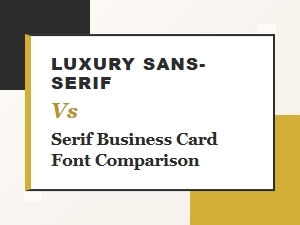 Luxury Sans-Serif vs Serif Business Card Fonts: Which Style Elevates Your Brand?
 Elegant Business Card Font Styles for Luxury Brands and Premium Industries